

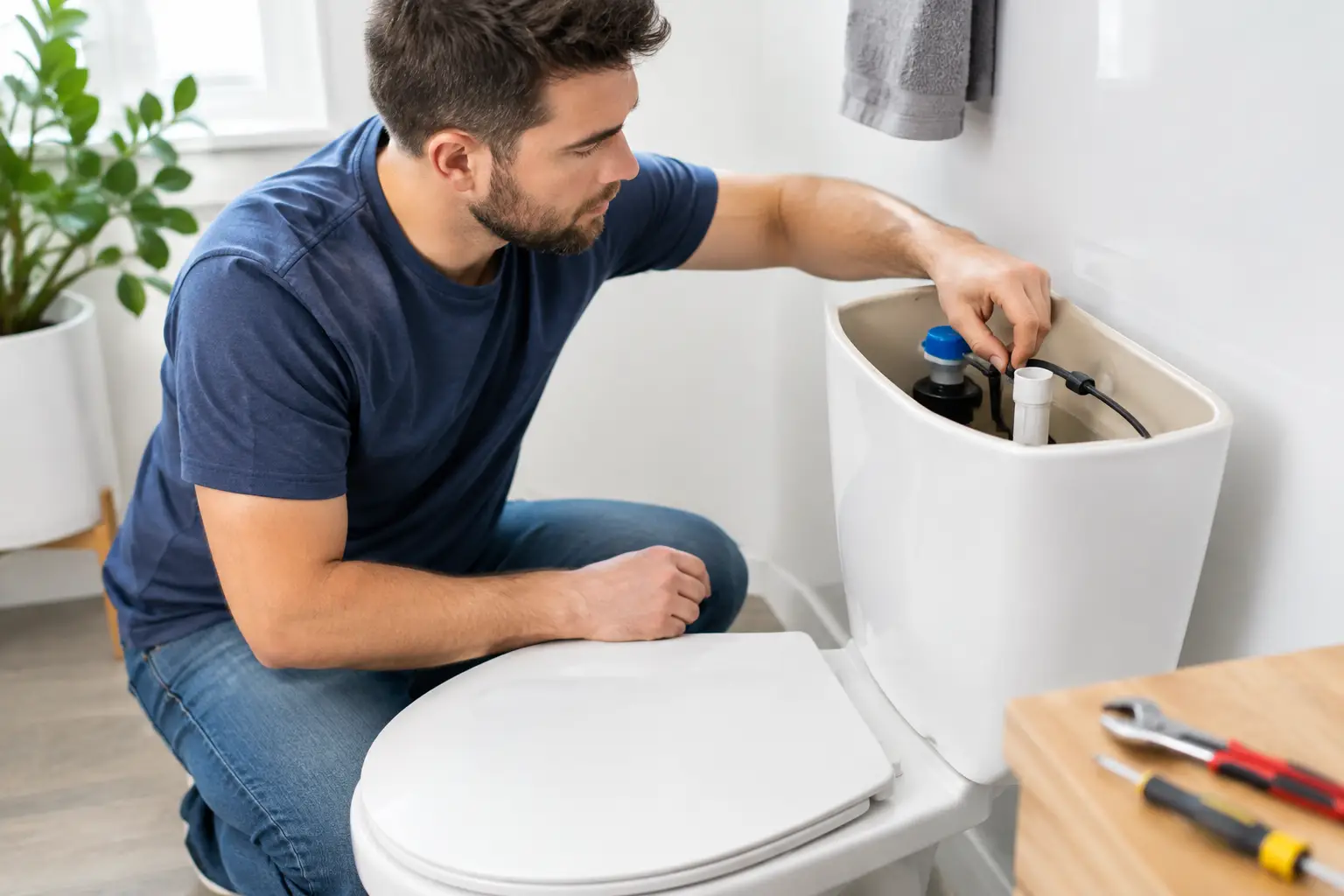
A toilet that keeps filling after a flush can waste a surprising amount of water, create an irritating hiss and, in some cases, send water through the overflow. Knowing how to stop toilet running can save money and prevent a small cistern fault becoming a more disruptive plumbing repair. Most problems sit inside the cistern and can be checked safely before you call for help.
Start by removing the cistern lid carefully. Ceramic lids can be heavier than they look, while modern dual-flush lids may need the flush button unscrewed or lifted out first. Put the lid on a towel or flat surface where it cannot be knocked over, then flush the toilet and watch what happens as the cistern refills.
Why a toilet keeps running
A running toilet usually has one of two faults. Either the inlet valve is allowing too much water into the cistern, or the flush valve is letting water escape continuously into the pan. The first fault often causes water to run into the overflow tube. The second may be quieter, with a thin but constant trickle down the back of the toilet bowl.
Older toilets commonly use a float arm and ball valve. As the water level rises, the float lifts and closes the inlet valve. Newer cisterns tend to use a compact fill valve with a plastic float cup or internal float. Many Dublin homes have a mix of both, especially where bathrooms have been updated but an older downstairs WC remains in place.
Before touching any parts, look for obvious damage, limescale build-up or a component that has come loose. Do not force plastic fittings, as older parts can become brittle over time.
How to stop a toilet running safely
The quickest way to stop water entering the cistern is to close the isolation valve on the water supply pipe. This is usually a small valve near the toilet, often with a flat screwdriver slot. Turn it clockwise by a quarter turn until the slot is across the pipe. If there is no isolation valve, use the stopcock for the property, usually found under the kitchen sink or near the water supply entry point.
Flush the toilet once after turning off the supply. This empties most of the cistern and makes it easier to inspect the working parts. Keep a towel nearby, particularly if you are working in a tight cloakroom or have an older connection that may drip when moved.
If you live in a flat or manage a rental property, make sure you know which stopcock serves your own supply before shutting anything off. Shared systems and communal tanks can vary, particularly in older buildings.
Check whether water is entering the overflow
Turn the water back on briefly and watch the water level. If it rises above the overflow tube, the inlet valve is not shutting off properly. In an older cistern, gently lift the float arm by hand. If the water stops, the float may simply need adjusting, or the valve washer may be worn.
Some float arms have a small screw that changes their height. Adjust it a little at a time so the water stops around 20 to 25 mm below the top of the overflow tube. Do not set the level too low, as the toilet may then produce a weak flush.
On a modern fill valve, the float cup should move freely up and down the valve body. Limescale, grit or a worn internal diaphragm can stop it closing fully. Cleaning visible debris may help, but a valve that continues to run is usually better replaced than repeatedly adjusted. Replacement fill valves are generally inexpensive, but the fitting must suit the cistern layout and water inlet position.
Check the flush valve and seal
If the cistern fills to the correct level but water still trickles into the bowl, the flush valve seal is the likely cause. This is the rubber washer at the base of the flush valve that holds water in the cistern until the button or handle is pressed.
With the water off and the cistern emptied, inspect the seal for distortion, cracks or a rough coating of limescale. In hard-water areas, mineral deposits can prevent a proper seal even when the rubber itself looks intact. Remove the seal only if you can identify how it refits, then rinse it and wipe the seating area clean with a soft cloth.
If the rubber is stiff, misshapen or damaged, replace it with the correct model. Universal seals are available for some systems, but they do not suit every flush valve. Taking a clear photograph of the existing valve and seal before buying parts can avoid an unnecessary second trip to the merchants.
Test the flush button or handle
A flush button that sticks or does not return properly can hold the flush valve slightly open. This is particularly common on dual-flush toilets where the button rods are set too long or have shifted during cleaning or previous repair work.
Check that the button moves freely and that the rods only contact the flush mechanism when pressed. A small adjustment may solve the problem. If the button assembly is cracked, loose or corroded, replacement is usually the more reliable option.
On lever-operated toilets, check that the chain or linkage has a small amount of slack. A chain pulled too tight keeps the valve off its seat, allowing the cistern to leak slowly into the pan.
Simple checks before buying replacement parts
A few observations can help you buy the right part or explain the fault clearly when booking a plumber. Watch the cistern for several minutes after it has filled. If the water level rises into the overflow, focus on the inlet valve. If the level settles but drops slowly without anyone flushing, focus on the flush valve seal.
You can also place a few drops of food colouring in the cistern, without flushing. If colour appears in the bowl after 10 to 15 minutes, water is passing through the flush valve. Avoid using bleach tablets inside the cistern as a long-term fix. They can damage rubber seals and plastic components, and they do not address the underlying fault.
A running toilet can sometimes be heard only at night, when the house is quiet. Listen for a periodic refill every few minutes, as this is a strong sign that water is leaking from the cistern into the bowl. If you have a water meter, check it when no taps or appliances are in use. Ongoing movement may point to a toilet leak or another hidden plumbing issue.
When a toilet repair needs a professional
Many homeowners can clean a seal, adjust a float or replace a straightforward valve. It makes sense to call a professional when the toilet has a concealed cistern, the isolation valve does not close properly, fittings are seized, or water is leaking onto the floor. A cracked cistern, damaged supply pipe or failed waste connection should also be dealt with promptly.
There is a trade-off between changing a small seal and replacing an ageing internal mechanism. If the toilet is old and several parts show wear, replacing the complete inlet or flush valve assembly can be better value than making repeated minor repairs. The right option depends on the cistern type, available parts and the condition of the surrounding pipework.
For landlords and property managers, a constantly running toilet is worth treating as an urgent maintenance issue. It can increase water charges, inconvenience tenants and become more difficult to repair if the original parts are no longer available. Irish Handyman can diagnose toilet faults, replace worn cistern components and deal with related plumbing repairs across Dublin.
Preventing the problem from coming back
Avoid forcing flush buttons, hanging cleaning blocks on moving parts or using strong chemical cleaners inside the cistern. If your water supply leaves visible scale on taps and shower screens, inspect cistern components periodically too. A quick check after a slow refill or a change in flush performance can catch wear before water begins running continuously.
Once the toilet is working properly, leave the cistern lid secure, reopen the isolation valve fully and check around the base and supply pipe for drips. A quiet cistern, a clean flush and a dry floor are good signs that the repair has done its job. If the sound returns or you are unsure what you are seeing inside the cistern, arranging a prompt repair is the simplest way to protect your home and water bill.
0 Comments