

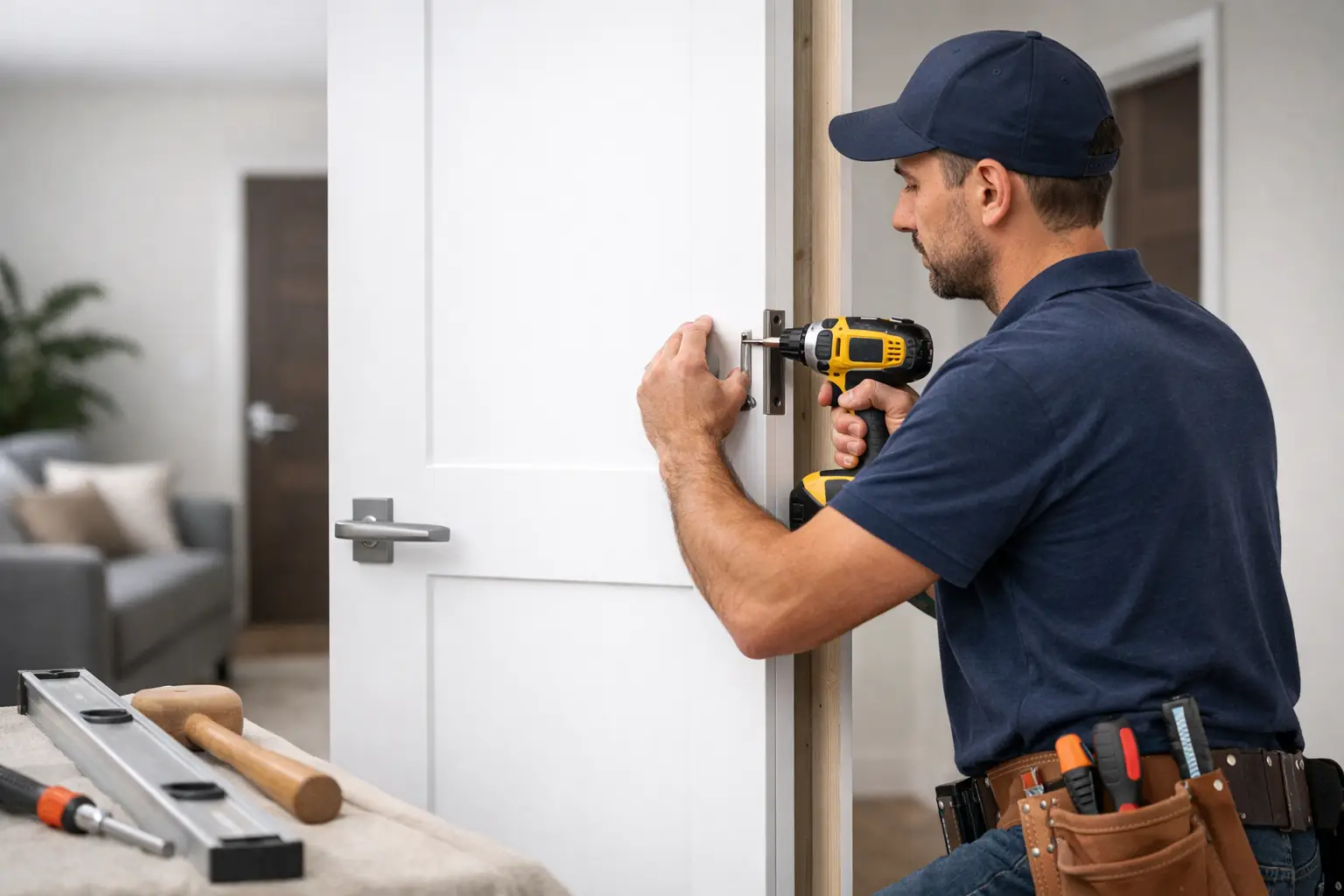
A new internal door can change how a room feels, but only when it closes cleanly, sits square in the frame and has hardware that works properly. Searching for montaj uși interioare Dublin is often the first step for homeowners who have bought replacement doors but do not want the risk of gaps, sticking hinges or a latch that will not catch. Professional fitting saves time and helps ensure the finished door looks right from every angle.
Internal door installation is more than fixing a slab of timber to a frame. Every property has small variations in its openings, floors and existing joinery. A practical assessment before work starts makes the difference between a door that simply hangs and one that performs reliably for years.
What a professional internal door fitting includes
A proper fitting begins with measuring the opening, the existing lining and the new door. Many homes in Dublin, particularly older properties, have frames that are not perfectly square. The floor may also rise slightly towards one side, or the frame may have moved over time. These details affect how much can be trimmed and where the hinges should sit.
The fitter will check that the door is suitable for the opening and confirm its swing direction. This matters more than it may seem. A door opening into the wrong part of a room can block furniture, narrow a hallway or make a bathroom awkward to use. In smaller homes and flats, planning the opening direction carefully can make day-to-day living easier.
The door is then marked, trimmed where necessary and hung with correctly positioned hinges. The latch, handles and strike plate need accurate alignment so that the door closes without forcing it. Final adjustment usually includes checking the clearance around the edges, smoothing cut surfaces and making sure the door neither swings open on its own nor catches on the floor.
Why off-the-shelf doors still need careful preparation
Most replacement internal doors are supplied in standard sizes. That does not mean they will fit every standard-looking opening. A few millimetres can matter, especially where the frame has layers of old paint or where a previous door was heavily trimmed to suit an uneven opening.
Before arranging montaj uși interioare Dublin, measure the width and height of the opening in more than one place. Measure near the top, middle and bottom for width, then both sides and the centre for height. This gives a better picture than one quick measurement. If you are ordering doors before a fitting visit, keep the manufacturer’s trimming limits in mind. Some engineered and hollow-core doors allow only limited trimming, while solid timber doors can usually be adjusted more easily.
It is also worth considering the thickness of the new door. A thicker or heavier door may require stronger hinges and can affect the position of existing stops, latches and handles. Fire doors have further requirements and should be fitted with the appropriate compatible hinges, closers and seals where needed. They should never be cut down or altered beyond the manufacturer’s stated allowance.
Choosing a door that suits your home
The best door is not always the most expensive one. It should suit the room, the frame and the level of daily use. Hollow-core doors are light and cost-effective, making them a sensible option for bedrooms or rooms with less traffic. They can be less resistant to knocks and offer limited sound reduction.
Solid-core and solid timber doors feel more substantial, reduce sound transfer better and suit busy family homes. They are heavier, so the frame and hinges must be able to support them. They also cost more to buy and fit, particularly if several doors are being replaced at once.
Glazed internal doors are useful where a hallway, landing or kitchen needs more natural light. Frosted or reeded glass can retain privacy in home offices, bathrooms and living areas. The trade-off is that glazed doors are more delicate to handle and their glazing must be protected during installation and decorating.
If you are refreshing several rooms, choosing a consistent style can give the home a more finished appearance. That does not mean every door needs to be identical. A glazed door to a darker hallway and solid doors for bedrooms can work well, provided the style, finish and hardware complement each other.
Common fitting problems and how they are avoided
A door that rubs along the floor is one of the most common complaints after a rushed installation. Sometimes the cause is an uneven floor, but it can also be poor hinge positioning or insufficient clearance. The solution depends on the cause. Trimming the bottom may help, but too much trimming can spoil the proportions of the door or expose unfinished material.
Gaps are another issue. Small, even gaps allow the door to move freely and look tidy. Large or uneven gaps can make a new door appear poorly fitted, even if the hardware works. On older frames, the answer may involve adjusting the door, repairing the lining or replacing worn door stops rather than trying to force a square door into a distorted frame.
Loose handles and noisy hinges are usually preventable with quality hardware and careful installation. Hinges should be secured into sound timber, not stripped screw holes. Handles should be fitted at a consistent height across the house where several doors are being changed. A small detail like this makes a noticeable difference to the finished look.
Prepare the room before fitting day
Clear access to the doorway makes the work quicker and protects your belongings. Move furniture away from the area and remove pictures, mirrors or fragile items close to the door swing. If flooring is being replaced, decide whether doors should be fitted before or after that work. New carpet, laminate or tiles can change floor height, so timing needs to be planned rather than guessed.
Have the door, hinges, handles, latch and any privacy lock available before the work begins. Matching hardware is often overlooked until late in the job, which can delay completion. If you are repainting the frame, discuss whether painting should happen before installation or after. In many cases, a final coat after fitting gives the neatest result, although pre-finishing the door itself can reduce the need for careful cutting-in around hinges.
For rented properties, landlords should also consider durability and ease of maintenance. A tough painted finish, dependable handles and readily available replacement parts may be more practical than delicate finishes that mark easily between tenancies.
When the frame needs attention too
Not every door issue is caused by the door itself. Damaged linings, cracked architraves, damp timber and old hinges can all affect the fit. If a frame is seriously out of line, fitting a new door alone may only hide the problem temporarily.
A repair may be enough where screw holes are worn, stops are loose or minor damage has occurred. In other cases, replacing the lining and architrave is the better long-term choice, particularly during a wider renovation. This creates more work at the start but provides a clean, square opening for the new door and prevents repeated adjustments later.
Humidity can also affect timber doors. Bathrooms, utility rooms and kitchens need suitable materials, adequate ventilation and a properly sealed finish around cut edges. A standard unfinished timber door in a damp room can swell and start sticking, even if it was correctly fitted on day one.
A practical route to a tidy result
Good door fitting combines accurate measurements, suitable materials and patient adjustment. It is not a job to rush because each change affects the gaps, swing and latch alignment. For one door, a homeowner may be comfortable doing the preparation and asking a professional to fit the door and hardware. For a whole-house upgrade, arranging the doors, frames, handles and any decorating work together is usually more efficient.
Irish Handyman provides practical help with internal doors, carpentry repairs and related home improvement work across Dublin. Whether you are replacing one damaged bedroom door or updating every internal door in a property, getting the measurements and fitting right gives you a quieter, safer and more polished home to enjoy every day.
0 Comments